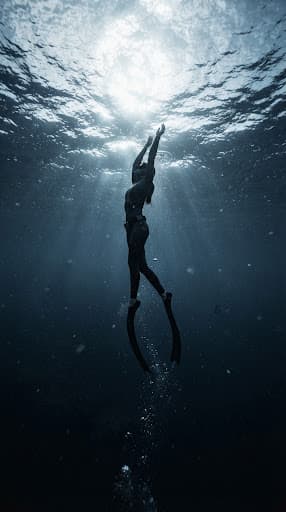
Most people come to freediving for the physical experience. What they often find after a few months of training is something they weren't expecting: a profound shift in how they manage anxiety and stress in everyday life.
The Mammalian Dive Reflex When a human face is submerged in cool water, a cascade of physiological changes occurs automatically: heart rate drops (bradycardia), blood is redirected toward vital organs (peripheral vasoconstriction), and the spleen contracts to release oxygen-rich red blood cells. This is the mammalian dive reflex — a survival mechanism shared with all air-breathing vertebrates.
The activation of this reflex induces a parasympathetic state that many practitioners describe as profoundly calming. This is not just subjective — heart rate reductions of 10–25% have been documented in controlled studies of trained freedivers during submersion.
Training the Stress Response The process of learning to freedive requires systematically confronting and managing physiological stress signals. The urge to breathe, the sensations of pressure change, the quiet of the deep — all of these require the diver to stay present and calm rather than reacting impulsively.
This translates. Students who have trained with us for six months or more frequently report better stress tolerance in professional and personal situations. "I used to respond to work pressure by panicking internally," one student noted. "After freediving, I learned to identify the physical sensation of stress and choose not to act on it immediately. That skill came directly from breath-hold practice."
Sleep and Recovery Breath-hold training — particularly CO₂ tolerance work — appears to improve sleep quality for many practitioners. The likely mechanism is increased parasympathetic tone and improved CO₂ sensitivity, which regulates the body's arousal response.
A note of caution: freediving should not be treated as a therapeutic intervention, and individuals with clinical anxiety, depression or cardiovascular conditions should consult their doctor before beginning. That said, the anecdotal evidence from practitioners worldwide is consistent and striking.
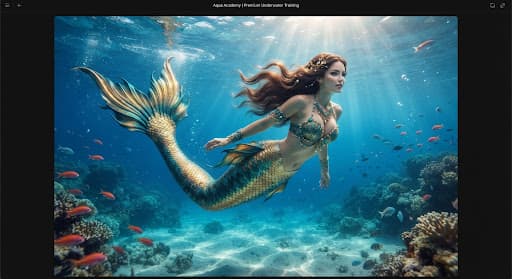
For those who want to experience the calming effects of water immersion without committing to a full freediving programme, our mermaiding programme — which includes significant time floating and moving gently in water — produces similar relaxation responses for many students.